Learning That Actually Leads to Change: A Short Reflection from the ZWEE Podcast
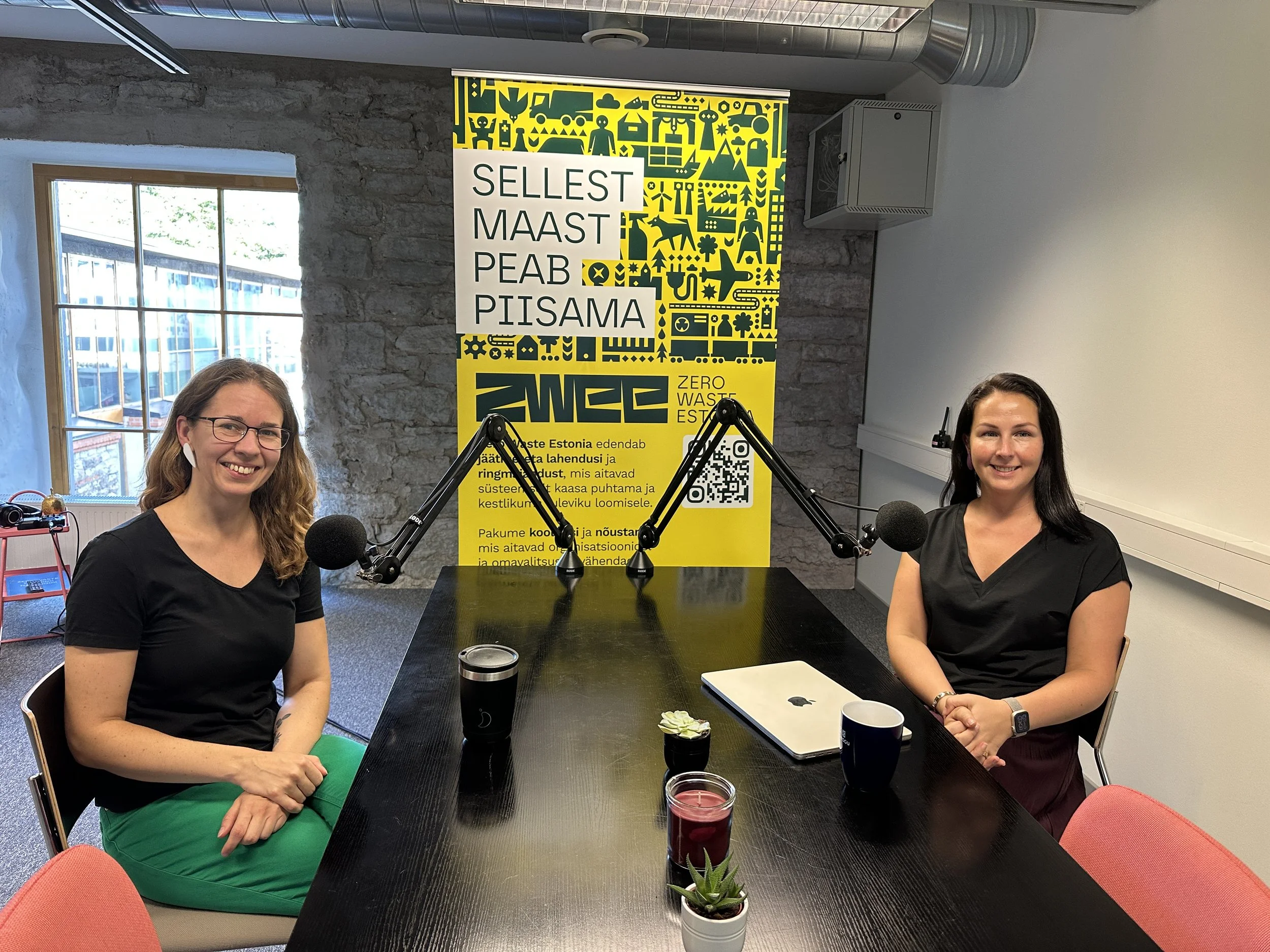
In the 5th episode of the Zero Waste Estonia podcast, guest Kadri Kalle (Head of Education Programmes) highlights a simple but often overlooked truth: people do not change just because they receive information. If we want sustainable choices to become everyday practice, we need to understand how learning really works.
According to Kadri, learning is fundamentally a change in the brain – and change requires effort. This doesn’t mean learning has to be stressful or unpleasant, but comfortable, passive listening rarely leads to lasting impact. Learners need to be active: making connections, asking questions, trying things out, making mistakes, and reflecting. Mistakes are not bad; they are an essential part of learning – much like learning to ride a bicycle.
The conversation also challenges the idea of one-off trainings. Single-day “information dumps” may feel productive, but without later recall and application, most of what was learned quickly fades. That's why Zero Waste Estonia organises it's trainings at least in two parts, where there is opportunity to come back to the learnt material.
We value interactive formats such as workshops, discussions, and living library sessions, where questions matter more than ready-made answers.
In the fast-changing world of sustainability, where green solutions and technologies evolve constantly, critical and systems thinking become essential skills. It’s not about memorising what is “right” or “wrong”, but about learning how to evaluate impacts, recognise trade-offs, and know when to ask for expert input.
Kadri leaves listeners with a powerful takeaway:
be critical not only of information, but also of your own thinking. We all have blind spots and assumptions – noticing them is a key step toward real learning and real change.
If sustainability is the goal, then learning is the tool. And the better we understand that tool, the more likely change will reach everyday life.
Zero Waste Estonia is part of SusTool (Sustainability reporting tool) project (2023-2025) which is co-financed by Interreg Baltic Sea Region programme 2021-2027, 1 Priority Innovative societies, 1.2 Objective Responsive Public services and it contributes to EUSBSR PA Innovation Action.
Project partners include the Ministry of Economic Affairs and Communications as the lead partner from Estonia, and as partners: the Ministry of Finance and ITL from Estonia; VARAM and LIKTA from Latvia; DIMECC LTD from Finland, INFOBALT from Lithuania. The project will conclude on December 31, 2025.