
Estonian National Guide for Organizing Environmentally Friendly Events
Organizing and participating in any event inevitably means using resources – energy is consumed, waste is generated and emissions are released into the air. At the same time, every organizer has the opportunity to direct the event on a more environmentally friendly path.
Estonia has prepared the “National Guide to Organizing Environmentally Friendly Events” – a practical tool that helps organizers make informed and sustainable choices at every stage of the organization. The guide does not only focus on reducing environmental impact, but also supports raising awareness among participants. An informed participant is not just a visitor, but also becomes a carrier of environmentally friendly values in their community and everyday life.
“We have tried to create a guide that offers something to different event organizers, from small home cafe days to big international conferences. Besides practical recommendations and tips, we have also included some common questions that organizers have or where to pay extra attention.
Quoting one of the plain language summaries of our guide: events that protect nature and are accessible to everyone, will bring in more happy people.” —Kadri Kalle, lead-author of the guide, Acento & Zero Waste Estonia Expert
The national guide covers reducing environmental impact in the following areas:
materials and purchasing
transport and logistics
energy use
catering and water use
waste management
consideration of the community and the surrounding area
accessibility
communication
requirements and recommendations for the caterer
You can dowload the guide here:
Estonian National Guide for Organizing Environmentally Friendly Events (ENG)
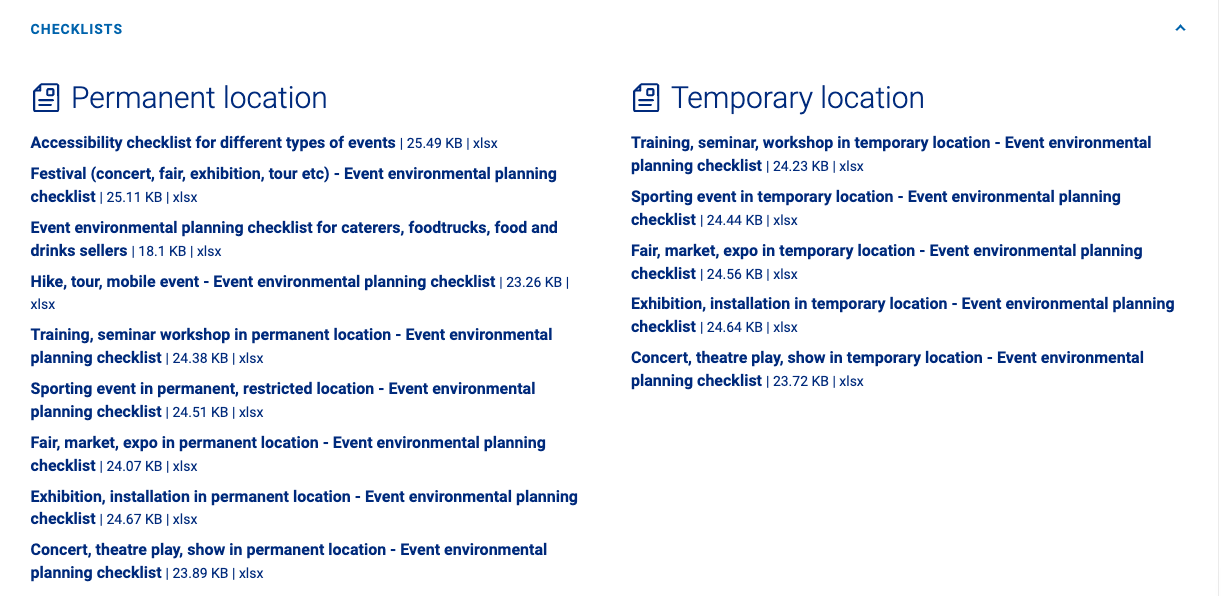
In addition, the Ministry of Climate provides a comprehensive set of practical checklistscovering different event types and formats, from conferences and workshops to festivals, exhibitions, fairs, and sporting events. These checklists serve as useful planning tools to help organizers incorporate sustainability considerations throughout the event lifecycle.
The website also includes a range of ready-to-use communication materials, such as printable waste-sorting labels, reusable tableware information signs, and other visual resources that can be directly applied at events.
